When is the Best Time to Have a Tennis Court Resurfaced?
A tennis court goes through constant wear from weather, foot traffic, UV exposure, and regular gameplay. Over time, even a well-maintained court can begin to show signs of deterioration that affect performance, safety, and appearance. Knowing when to schedule tennis court resurfacing can help extend the life of the court while keeping playing conditions consistent and enjoyable.
Signs That Your Tennis Court May Need Resurfacing
One of the clearest indicators that a tennis court needs resurfacing is visible surface damage. Cracks, fading colors, low spots, puddles, and uneven texture can all signal that the surface coating is wearing down. These issues can affect ball bounce and player footing, making the court less reliable for play.
Small cracks may not seem urgent at first, but they can grow larger as moisture seeps below the surface and temperatures fluctuate. Addressing these issues early can help prevent more extensive repairs later on. Courts that are heavily used, especially at schools, clubs, or community facilities, may require resurfacing more frequently than residential courts.
How Often Should Tennis Courts Be Resurfaced?
In many cases, tennis courts benefit from resurfacing every four to eight years, depending on usage levels, climate conditions, and the original court construction. Acrylic-coated asphalt courts tend to require resurfacing more regularly than post-tension concrete courts because asphalt can shift and crack over time.
The weather also plays a major role. Courts exposed to freeze-thaw cycles, intense sunlight, heavy rain, or snow may experience faster surface deterioration. Regular maintenance, such as cleaning, crack repair, and drainage management, can help extend the lifespan between resurfacing projects.
Why Spring and Summer Are Common Resurfacing Seasons
Warm, dry weather creates favorable conditions for tennis court resurfacing. Spring and late spring, summer, and early fall are often ideal because resurfacing materials typically require consistent temperatures and dry conditions to cure properly.
Scheduling resurfacing during these months can also help minimize downtime before peak playing seasons. For facilities that host tournaments or seasonal leagues, planning resurfacing ahead of busy periods can help ensure that the court is ready for regular use. It is also important to avoid resurfacing during stretches of extreme humidity or frequent rainfall, since moisture can interfere with coating application and drying times.
The Benefits of Resurfacing at the Right Time
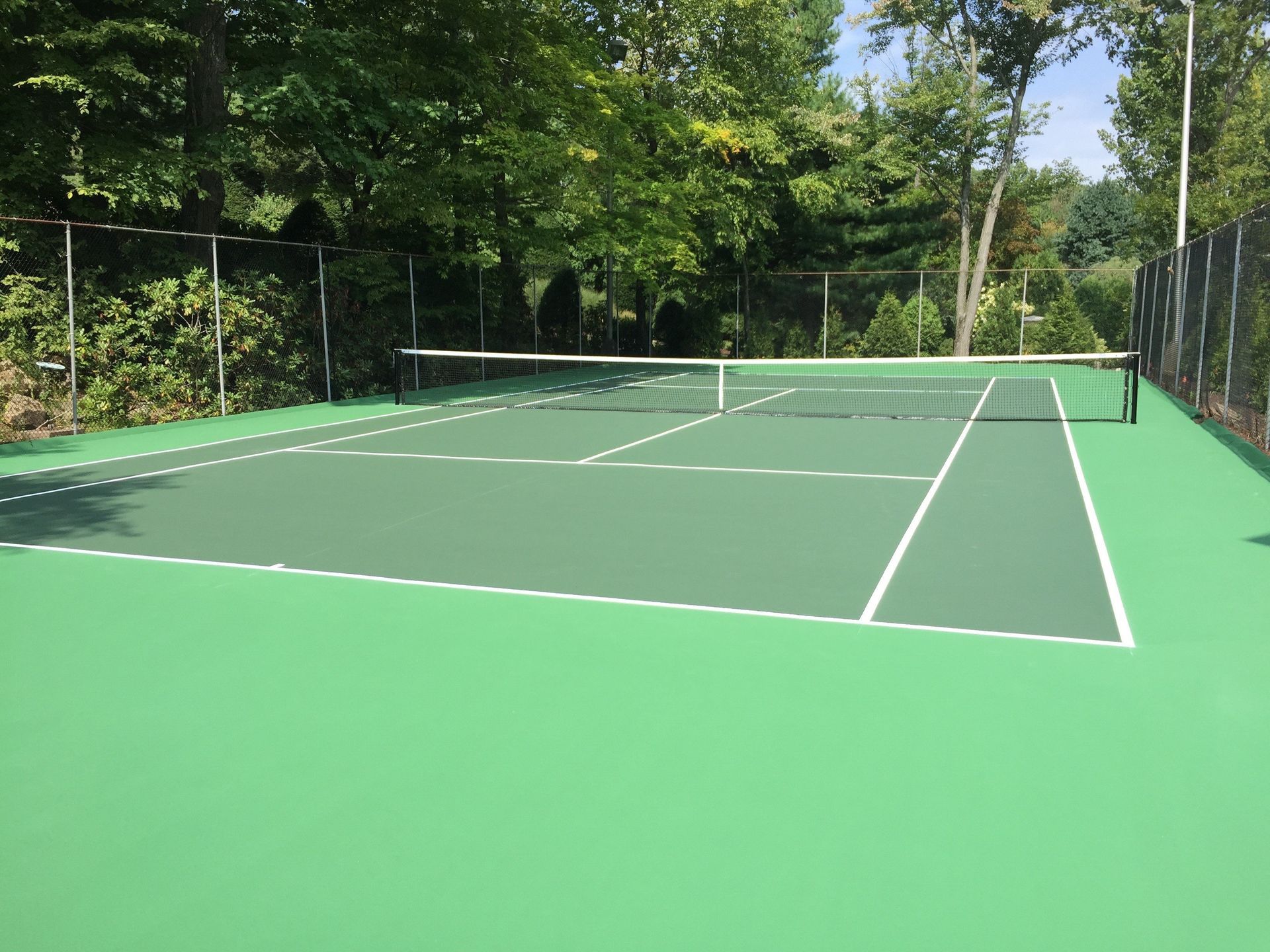
Resurfacing a tennis court before damage becomes severe can improve playability and help avoid larger structural issues. A refreshed surface can provide more consistent ball response, improved traction, and a cleaner overall appearance.
Routine resurfacing may also help preserve the underlying court foundation. When cracks and surface wear are left untreated, water infiltration can weaken the base layers and increase repair costs over time. For schools, athletic facilities, parks, and homeowners, resurfacing can also enhance the overall look of the property while supporting long-term court performance.
Tennis Court Resurfacing Services From R.S. Site and Sports
At R.S. Site and Sports, we provide tennis court resurfacing, repair, construction, and maintenance services throughout Connecticut and parts of New York, including Greenwich, Westport, Westchester County, Suffolk County, Long Island, and the surrounding areas. Our company works on residential and commercial courts and offers a variety of court surface solutions, including post-tension concrete, Har-Tru, clay, and artificial grass systems. If you’re looking to have your tennis court resurfaced, contact us today!